


New Survey Shows Inland Revenue Helpful, But Hindered
Press Release: Chartered Accountants Australia and New Zealand and Tax Management New Zealand
24 November 2021
Helpful, but hindered is the overarching finding in a new survey digging into public practice accountants’ experiences with Inland Revenue (IR).
Conducted by Chartered Accountants Australia and New Zealand and TMNZ, the survey of 361 members in public practice asked a range of questions about the timeliness of IR’s service, the quality of interaction, and the business support on offer.
“Over 80 per cent of those surveyed rated their agent account manager interactions positively over the last 12 months, which Inland Revenue should be pleased with,” said CA ANZ NZ Tax Leader John Cuthbertson.
“The flipside is that it is taking much longer for Inland Revenue to resolve queries. The number of public practitioners who say it’s taking more than 6 days to resolve their queries has risen from 5 per cent of respondents, to 47 per cent.”
Despite this, accountants and tax agents are positive about not only their interactions with account managers, but also the support measures that Inland Revenue has administered.
“Accountants and agents across New Zealand are telling us that the tax support provided by Inland Revenue has been as effective this year, as it was last year,” said Tax Management New Zealand Chief Executive, Chris Cunniffe.
“It’s been another turbulent year for businesses, and the tax relief and support measures have made a positive difference. It’s just that our survey shows it can take a while to get through to Inland Revenue, and to have queries resolved and assistance locked in.”
The appreciation of Inland Revenue’s support was illustrated by 85 per cent of participants reporting that they had clients who utilised the remission of interest and penalties for late payment of provisional tax due to COVID.
Additionally, over 71 per cent of participants have found it easy or not difficult, to enter into or assist clients with an instalment arrangement in the past 12 months. This covers all types of tax, including GST, PAYE and FBT, not just provisional tax.
The increased level of scrutiny and information required to access COVID support was also felt by survey respondents.
“Approximately half the survey respondents said that accessing COVID support was harder than in 2020. That’s not surprising, given the public’s desire for more scrutiny about who received support, and the declarations becoming more stringent during this year’s lockdowns,” concluded Mr Cuthbertson.

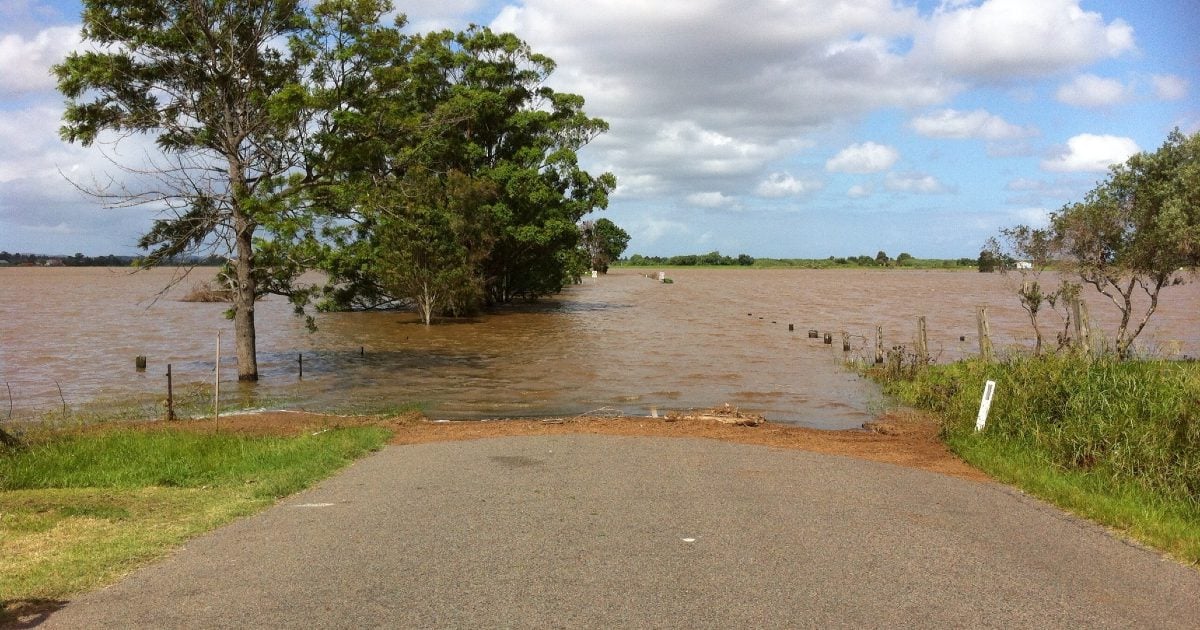
Cashflow relief for farmers impacted by flood or drought
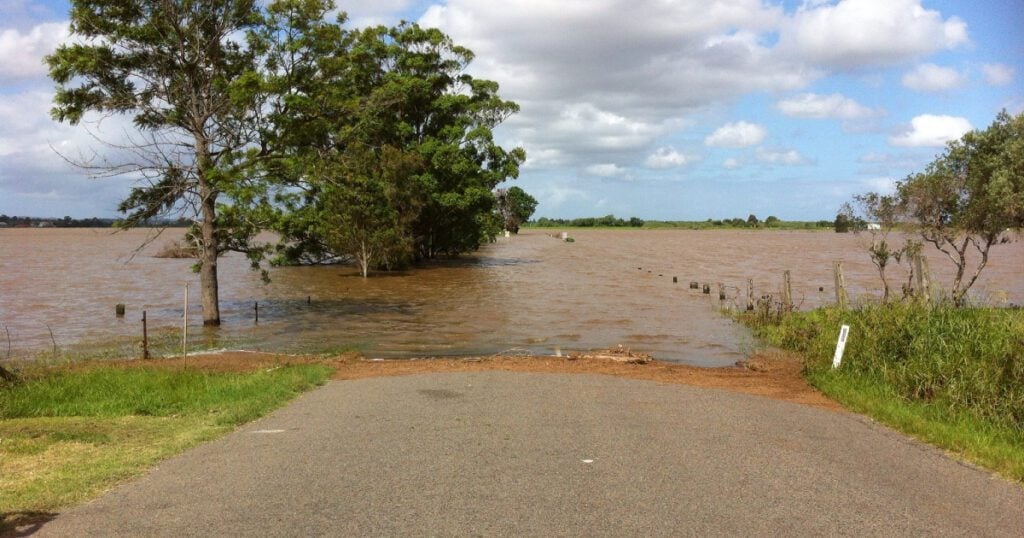
Those impacted by flooding in Canterbury or drought elsewhere in New Zealand have another option to manage their cashflow.
It’s called tax pooling.
It lets taxpayers defer their upcoming provisional tax payments to a time that suits them, without incurring interest (currently seven percent) and late payment penalties from Inland Revenue (IRD).
The service – which has been operating with the blessing of the taxman since 2003 – is available through an approved commercial provider such as Tax Management NZ (TMNZ).
The impact of extreme weather
The Government has declared the recent flood in the Canterbury region as a medium-scale adverse weather event.
As those in this part of New Zealand assess the damage and begin the clean-up following the large deluge of rain, a big dry is beginning (or, in some cases, continuing) to bite other parts of New Zealand. The drought has been classified as a large-scale adverse weather event.
Farmers impacted by these contrasting weather events are being encouraged to act early and assess their options if they need assistance.
For those battling drought, some tough decisions around stock and feed will need to be made. In the Canterbury region, flooding only compounds the financial pressure as many were also dealing with drought beforehand.
Cashflow will be important during this difficult period.
Help is available
Managing tax payments will be a key consideration in managing cashflow too.
IRD, to its credit, is exercising some discretion.
It will allow farmers and growers affected by the Canterbury flood to make early withdrawals from the income equalisation scheme.
For those whose current or future income will be significantly affected by drought, IRD will allow late deposits for the 2019-20 income year up to 30 June 2021.
Early withdrawals are also available in the case of a medium-scale adverse event or if someone is suffering serious hardship.
Please note a taxpayer must satisfy certain criteria for IRD to exercise its discretion around the income equalisation scheme.
There's also the option of re-estimating provisional tax.
However, while that allows someone to get a refund of tax they have paid earlier in the year, it does come with some risk.
Free up cashflow by deferring payment of provisional tax
Farmers growers with a May balance date are due to pay their the final instalment of provisional tax for the 2020-21 income on 28 June.
For a small interest cost, someone can use TMNZ to defer this payment.
We make a date-stamped tax deposit to IRD on behalf of a taxpayer on 28 June and the taxpayer pays us when it suits their cashflow.
A taxpayer can either pay the full tax amount at a date of their choosing or enter an instalment arrangement.
When a taxpayer satisfies their arrangement with TMNZ, IRD will treat it as if the taxpayer had paid on time. Any interest and late payment penalties showing on their account will be remitted.
A taxpayer has up to 12 months to pay their 28 June provisional tax with TMNZ.
TMNZ’s interest cost is much cheaper than what IRD charges when someone pays their tax late.
Please click here to register with TMNZ. Alternatively, feel free to contact us if you have any questions.

Can AIM taxpayers use tax pooling?
A taxpayer cannot use tax pooling to defer payment of, or settle, provisional tax instalments calculated under the accounting income method (AIM).
However, TMNZ can help AIM taxpayers with terminal tax or when they receive a notice of reassessment.
What does tax pooling legislation say about AIM?
Legislation in the Income Tax Act 2007 clearly states that a taxpayer can use tax pooling funds to satisfy “a provisional tax liability other than under the AIM method”.
Please refer to sections RP17-RP21 of the Act for further information.
Why IR doesn’t allow tax pooling to assist with AIM payments?
Inland Revenue (IR) says tax pooling manages taxpayers’ uncertainty around provisional tax payments and their exposure to interest.
Consistent with this objective, tax pooling is not currently available for tax types where someone has certainty of their liability at the time of payment (for example, GST).
Given the payments made under AIM are calculated on actual accounting profit, taxpayers will have certainty about what's due.
As such, it's IR’s view that it's not appropriate to allow tax pooling for provisional tax payments calculated under AIM.
What does that mean for you?
IR will reject the use of any tax pooling funds to satisfy an underpaid AIM instalment. As a result, late payment penalties and interest will continue to show on a taxpayer account.
They will, however, accept the use of tax pooling funds to settle a terminal tax liability. The same applies if an AIM taxpayer has additional tax to pay after receiving a notice of reassessment.
Please be mindful of these facts when entering arrangements with TMNZ.
It’s also an important consideration before electing to use AIM to calculate provisional tax.
That's because paying tax when income is earned is not necessarily the same as when cash is received.
If someone is unable to pay an AIM instalment on time or in full due to cashflow constraints, the safety net of tax pooling will not be available to reduce their exposure to interest and eliminate late payment penalties.
Feel welcome to contact us if you have any questions.

Make IR interest, late payment penalties disappear
A missed or underpaid provisional tax payment often means a taxpayer is faced with a steep interest cost and potentially late payment penalties on top of what they owe.
However, tax pooling can make that go away.
A big frustration with Inland Revenue (IR) is that it expects taxpayers to pay the correct amount of tax on the dates it sets. No ifs, no buts.
Fail to adhere to this rigid timetable or underpay and you will face the consequences.
IR charges interest – 9.89% as at 8 May 2025 – from the date the payment was due until you pay the outstanding amount.
Late payment penalties may also apply as follows:
- One percent the day after payment was due.
- An additional four percent if the tax amount (including late payment penalties) remains unpaid after seven days.
A tax pooling provider such as TMNZ operates with the blessing of IR. It can be of assistance if taxpayers find themselves in this situation.
Where might this be useful?
In the event you missed your recent 7 May provisional tax payment – or any other instalment relating to the 2020-21 income year, for that matter – we can eliminate any late payment penalties for which you may be liable and significantly reduce the interest you pay.
You make your payment to TMNZ and we apply backdated tax that was paid to IR on the original date(s) it was due against your liability.
The taxman treats it as if you paid on time once it processes this transaction.
This wipes any IR interest and late payment penalties showing on your account.
You have the option of making to TMNZ a one-off payment at a date of your choosing or making regular instalment payments towards your liability over a longer period.
TMNZ gives you up to 13 months to pay your 7 May provisional tax for the 2020-21 income year.
Is your 2020 terminal tax overdue?
You still have time to use TMNZ to reduce the interest cost and eliminate late payment penalties if you have outstanding provisional or terminal tax liabilities for the 2019-20 income year.
However, you will have to act quickly.
Tax pooling legislation gives taxpayers an additional 75 days past their terminal tax date to pay their terminal tax.
If your terminal tax for the 2019-20 income year was due on 7 April 2021, you would have until 15 June to settle owe with TMNZ.
Reassessed by IR
TMNZ can also assist with historic income tax payments and other tax types such as GST and PAYE if you receive a notice of reassessment from IR.
You have 60 days from the date the IR issues this notice to use tax pooling.
Please contact us if you have any questions.

Payment options for 15 January provisional tax
One of the challenges of paying provisional tax in times of economic uncertainty is making a payment that is both appropriate and does not negatively impact your cashflow.
Tax is one of the largest expenditure lines for a business, so you want to get it right.
You don’t want to overpay, because that’s money sitting at Inland Revenue (IR) that you could be utilising in your business. Conversely, you don’t want to underpay because you run the risk of facing IR interest and late payment penalties from the date of your underpayment.
Tax pooling offers a safety net if you cannot make your 15 January payment on time or accurately forecast your payment.
It's a service that offers benefits not available to those who pay IR directly, at no downside.
Pay provisional tax when it suits you
The Christmas-early New Year period is often a challenging time. After all, it is a four-week break from business as usual as things slow down.
For someone looking to manage cashflow, tax pooling lets you pay your 15 January provisional tax when it suits you.
Acceptance is guaranteed, and no security is required.
As an IR-approved tax pooling provider, TMNZ can be used to pay your tax on the actual date it is due (e.g. 15 January 2021).
You then pay TMNZ as soon as cash is available and IR recognises it as if the money was paid on time by you.
There are a couple of ways to pay.
You can finance your provisional tax payment. This sees you pay a fixed interest cost upfront and then the core tax amount at an agreed date in the future.
Alternatively, you can enter an instalment arrangement. Under this payment plan, interest is recalculated on the core tax amount owing at the end of each month.
The instalment arrangement offers flexibility in the sense you can pay as and when it suits your cashflow.
All tax pooling arrangements eliminate late payment penalties. The interest payable is significantly cheaper than what IR charges if you fail to pay on time.
Pay what you think, top up later
Most taxpayers tend to base their provisional tax on a 105 percent uplift of the previous year’s liability.
However, the current economic climate may have forced some in highly impacted sectors to revise expectations around profitability for the 2020-21 income year to the point where making payments based on the calculation above is no longer appropriate.
Others simply may be facing difficulty forecasting their liability. As such, they may want to keep cash close at hand in case things change suddenly.
Now there is some good news.
You do not need to pay provisional tax on 15 January based on uplift, nor do you have to file an estimate to pay less than uplift.
Instead you can pay provisional tax based on your forecast expectations of profitability for the year at the time.
Don't worry if, once you determine the liability for the 2020-21 income year, it transpires that you have underpaid. You can purchase any additional tax you owe on 15 January 2021 from TMNZ.
This can be done at a cost that is less than IR’s debit interest rate. It also eliminates any late payment penalties incurred.
That's because the tax you are purchasing from TMNZ was paid to IR on the date it was originally due.
You pay the core tax plus TMNZ's interest cost when you make your payment to TMNZ. TMNZ then applies the date-stamped tax sitting in its IR account against your liability.
IR will treat it as if you paid on 15 January 2021 once it processes this transaction. The remits any late payment penalties showing on your account.
Please contact us if you have any questions about tax pooling.

Anti-money laundering requirements and tax pooling
Tax Management NZ (TMNZ) must now conduct a limited form of customer due diligence on all clients as part of recent changes to anti-money laundering (AML) requirements.
As such, we will be collecting information about the taxpayers using our service and asking anyone acting on their behalf to supply some basic personal details.
We also need to see evidence that a taxpayer has an actual or expected liability at Inland Revenue (IR) before we transfer tax from our tax pool.
Transactions cannot be completed until we receive this information from you.
Information we require from a taxpayer
For a company, limited AML requires us to collect and hold information about them that is publicly available. We will obtain this information ourselves from the New Zealand Companies Office. You don’t have to do this.
For an individual or a trust, we only need information from a person acting on their behalf (see below).
What person acting on behalf means
As part of the limited AML requirement, TMNZ must collect the identity information from at least one individual who has the authority to act on behalf of a taxpayer using our service.
For tax agents, this can be either of the following:
- A partner, director or owner of your firm; or
- An agent at your firm who is linked to the taxpayer (e.g. the taxpayer’s accountant). It can also include the person who entered the transaction for the taxpayer or the person who receives email correspondence regarding the taxpayer’s transaction if this person is different from the accountant.
For a taxpayer, this can be ANY of the following:
- The taxpayer themselves, if they are an individual.
- An employee who has authority to act on behalf of the taxpayer (if they are a company).
- A trustee of the taxpayer (if they are a trust). We require a copy of the trust deed to ensure this person has authority to act.
The person above requires a TMNZ dashboard login and must either have visibility to view all taxpayers registered with your accounting firm or be linked to the specific taxpayer or transaction. This is not applicable if the taxpayer is an individual or the person acting on behalf is a trustee.
You have the option of supplying the tax agent or taxpayer identity information as part of limited AML.
Identity information we require from a person acting on behalf
TMNZ must collect the following identity information as part of the limited AML requirement if you are a person acting on behalf of the taxpayer:
- Your full legal name.
- Date of birth.
The above is required under section 15 Anti-Money Laundering and Countering Financing of Terrorism Act 2009.
Any personal information TMNZ holds about you or your clients is stored on a secure system that has been penetration tested to ensure this data will not be compromised.
Confirmation of tax liability
The limited AML requirement means TMNZ must also ascertain that a taxpayer using our service has a liability or expects to have a liability with IR before we can complete their transaction.
Proof of this can be in the form of:
- Written confirmation from a tax agent that the taxpayer is expecting to have a liability at IR. (This can be an approximation if the exact figure is not known at the time.)
- A copy of the taxpayer’s myIR transaction detail report for the relevant tax year.
- Standard uplift amounts determined from prior year RIT information. Prior year RIT information must be determined from copies of IR correspondence or written confirmation from a tax agent.
- A copy of any provisional tax estimate submitted to IR by the taxpayer.
- Any correspondence from IR showing a liability to pay in respect to the relevant tax year.
We only require confirmation of a taxpayer’s liability when we transfer funds from the tax pool to their IR account.
Does the information provided need to be verified?
A partial exemption granted to the tax pooling industry means there is no need for TMNZ to carry out the verification requirements that apply under full AML.
In other words, we do not need you to provide copies of documents to substantiate the information you provide.
Full AML, including verification, is still required for refunds or sales that meet our policy thresholds.
AML has been around for a long time – why are you asking for this information now?
Previously, TMNZ only carried out AML if a taxpayer was requesting a refund or sale over a certain amount from the tax pool.
However, our AML regulator – the Department of Internal Affairs (DIA) – is making tax pooling providers hold more information about every taxpayer using our service and anyone with authority to act on their behalf.
This limited AML requirement from DIA is in response to the accounting profession being brought into the AML regime. It has been in effect since 1 July 2020.
As a reporting entity captured under the Act, TMNZ must comply with the AML regulations set out in the legislation and any other requirements issued by DIA.
Please feel free to contact us if you have any questions. We’re happy to help.
Updated 12 October 2020
Disclaimer: This article is correct as at 12 October 2020. It is subject to change.