


Syncing provisional tax to cashflow
As a self-employed painter and decorator, Bart Taylor knows full well how business owners can get themselves into strife if they don’t plan for their tax obligations.
He speaks from his own personal experience.
That’s why Bart is happy to talk about how TMNZ enables him as a self-employed tradesperson to take the stress out of having to pay provisional tax on dates dictated by Inland Revenue (IR).
TMNZ offers Bart the flexibility to make the payments when it suits his cashflow.
As someone who doesn’t always get paid every week, that’s important because it offers his business some breathing space while he waits for the money he’s earned from completed jobs to land in his bank account and ensures that other important invoices can be paid in the meantime.
A bit about Bart
Bart owns and operates his own business in Christchurch.
He’s a one-man band and that’s the way he likes it. Plus, most of his work means he does not require a crew, although he will occasionally use contractors when required or on larger jobs.
Bart has been his own boss since 2013, when, at the age of 24, he decided to make a go of this painting lark on his own. The market in the Garden City was awash with painting gigs during the rebuild and becoming self-employed seemed like a low-risk move.
Fast-forward nearly eight years and his gamble has paid off. He is enjoying the benefits that come with self-employment and, as a husband and father in a young family, the better work-life balance he has achieved.
Tough tax lessons
Yet that’s not to say that everything has been a bed of roses during that time.
“Becoming self-employed has been a bit of a rollercoaster. Lots of learnings, lots of difficult times, hard times,” says Bart.
“First and foremost, I’m a tradesman, so I am a worker. The back office, the organisation, the financial side of things is not my strong point. With the tax side of self-employment, I managed it very poorly for years because I was so young.”
Like other business owners, Bart wasn’t as prepared as he should have been and was “stung” in his second year of trading. That was when two years’ worth of tax was due. Ouch.
He admits having to pay provisional tax was “rough for a little while”.
“In the trade industry, you don’t always get paid every week and you need cashflow to run your business,” explains Bart.
“My accountant saw there was a risk of if we paid that tax bill in full, that I might fall short in other areas and he wanted to make sure that my relationship with my trade suppliers stay good and that the invoices I need to pay get paid on time, not just the IR ones.
“He recommended Tax Management NZ and that freed up cashflow.”
Breathing space from IR to manage cashflow
That’s because TMNZ gives Bart the flexibility to pay his provisional tax when it suits his business, without the consequences of steep IR interest and late payment penalties.
It operates with the blessing of the taxman, too.
TMNZ makes a date-stamped payment to IR on Bart’s behalf on the date his provisional tax is due. Bart pays TMNZ at a time when it suits his cashflow.
TMNZ transfers the date-stamped payment to Bart’s IR account and IR treats it as if Bart himself has paid on time. This eliminates any IR interest and late payment penalties showing on his account.
“Sometimes the option of TMNZ, to be able to borrow some money for a short period of time, to make sure you hit that IR deadline, frees you up with your cashflow until that payment [you are waiting on] comes through,” says Bart.
“The fee of using Tax Management NZ is so low and affordable in comparison to the failings of if you ran out of money in that time, or the scramble and the stress, so it’s definitely worth it.
“It’s changed my perception around making these tax payments. It takes the stress off of it.”
And how does dealing with TMNZ compare to dealing with IR?
“You get a bit more of a personal touch with Tax Management NZ because you get a prompt response and it’s not a cookie-cutter [reply].”
Bart is one of many small business owners throughout New Zealand who benefits from the provisional tax flexibility TMNZ offers. Get in touch for more information about our service or if you have any questions. We’re happy to help. Alternatively, register with TMNZ to explore tax pooling for yourself.


Easy money for business not always the best option
Not long ago, one financial adviser was heard to lament the Kiwi habit of using the mortgage to fund the business. Others turn to bank overdrafts or their personal savings – all of which some might argue are easy choices to make but not necessarily the best.
Research by YouGov, commissioned by small business lending specialist Prospa, found that 69 percent of SMEs use personal finances for business purposes – including credit cards – and one in four borrows from family or friends.
Approximately 21 percent had drawn down on the mortgage.
The difficulty of securing business finance from banks in New Zealand is well documented, but before you borrow or mix personal and business finance, consider the options below.
Self-finance
Consider reducing your costs as a way to self-finance your business.
Businesses incur costs, such as small but regular payments that slip beneath the radar. Work with your accountant to identify unnecessary expenses and ways to save on costs — review operational details like slow collections, bad debtors, and redundant or excessive inventory.
One consequence of tight cashflow is the failure to pay taxes on time. This leads to expensive Inland Revenue (IR) interest and penalty payments. Tax pooling with TMNZ will help save you money in the long term because you avoid interest and penalties.
Research alternatives
Tax pooling is an alternative and financially cost-effective way to meet your tax payments on time, but there are also many other ways to get business finance.
Government loan schemes, discount invoicing (you administer your sales ledger) or factoring (the factoring company administers your ledger) merit thought.
Other options may include attracting investors or turning to a second or third-tier lender who is more expensive, but you may not be required to put your house on the line.
Review payment terms
Together with your accountant, consider negotiating better terms with your debtors while also reviewing your current payment terms. Simply changing your terms to, for example, seven days with all new customers – or getting the agreement of existing customers – could make a big difference to your finances.
Ultimately, it may be that mortgaging your house is your best option but get expert advice first because easier isn't necessarily better.

What is a cashflow forecast, exactly?
TMNZ has produced a guide called Better Cashflow Management. You can download your free copy here.
Most people nod in agreement when they hear the fable of the ant and the grasshopper – the ant worked all summer while the grasshopper lazed about, only for a starving grasshopper to come begging at the ant's door in winter.
However, it's surprising how few business leaders apply the common-sense lessons the fable teaches.
Many could be forgiven for thinking that the fable is about the value of hard work, and it is to an extent, but it is also a story about prediction and preparation – know what's coming and prepare for it.
Your stock standard cashflow forecast is an essential tool for this purpose.
In its most basic form, a cashflow forecast is a table that 'predicts', over a specific time, a) the money the business expects to receive, and b) the money the company expects to pay out – in essence, how much money you expect to have on hand in any given period.
The benefit of a cashflow forecast is that it allows you to predict the lean times, like winter for the ant, and the good times, like summer for the grasshopper. Summer and winter are pretty straightforward, but real-life business is far more complex and needs to consider, for example, factors like seasonal variables, capital expenditure and increases in expenses like rents.
A cashflow forecast is not a sales forecast, which concerns itself with predicted sales in the coming period and sometimes errs on the side of optimism.
The cashflow forecast should include expected sales but err on the side of conservative – sales aim for the stars, the cashflow forecaster settles for the moon.
1. Determine the period
The ant and the grasshopper concerned themselves with summer and winter. Business leaders will often prepare an annual cashflow forecast, but some argue it's best to take the ant's lead and forecast for a shorter period – even six months, or at least plan to review your cashflow forecast quarterly.
2. Predict your income
Look back over the last couple of years to get a handle on averages as well as the ebb and flow of cash, accounting for seasonal fluctuations and unforeseen variables that have impacted you in the past. Some would argue that basing your cashflow forecast on past performance is looking back, not forward, which is why using your sales forecast is important. Your historical financials may help you temper the optimism of the sale forecast towards realism.
3. Add your costs and outgoings
Don't leave out the small expenses because they quickly add up. Remember that not everybody pays on time. Kiwi SMEs wait on average 24.1 days to get paid, according to Xero's Small Business Insights for December 2020. Consider the risks associated with cost increases, like telephones and other fees. Plan for the best, expect the worst.
4. Put your cashflow forecast to work
A good cashflow forecast will give you an idea of what to expect so that you can prepare now to address any issues. If, like the ant, you note that the winter months of June, July and August will be tight, take steps to prepare better or improve the situation.
In the words of Sir Richard Branson, “Never take your eyes off the cashflow forecast because it's the lifeblood of the business”.
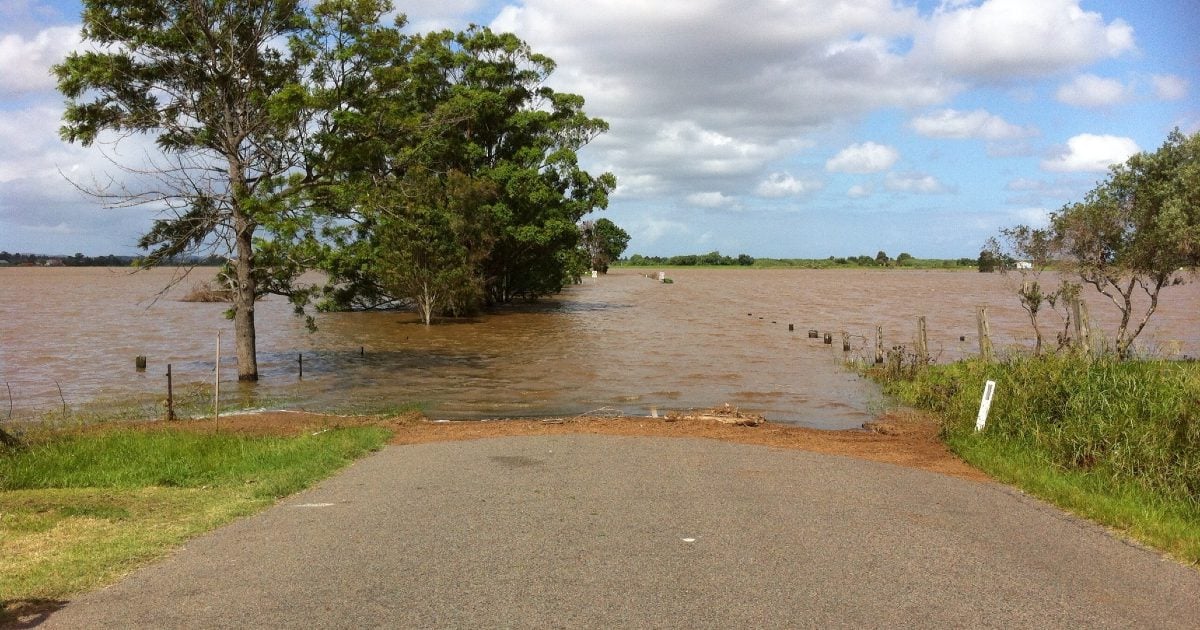
Cashflow relief for farmers impacted by flood or drought
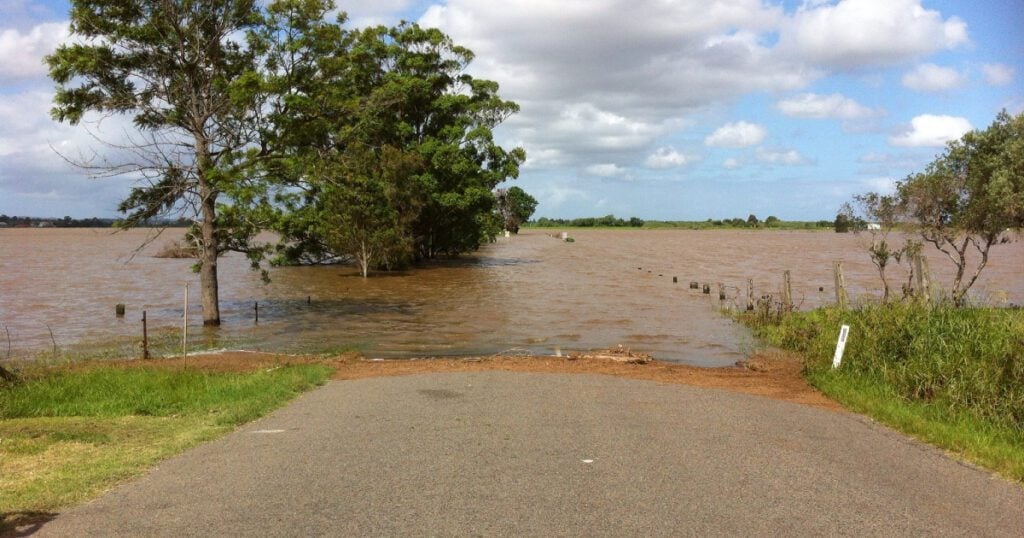
Those impacted by flooding in Canterbury or drought elsewhere in New Zealand have another option to manage their cashflow.
It’s called tax pooling.
It lets taxpayers defer their upcoming provisional tax payments to a time that suits them, without incurring interest (currently seven percent) and late payment penalties from Inland Revenue (IRD).
The service – which has been operating with the blessing of the taxman since 2003 – is available through an approved commercial provider such as Tax Management NZ (TMNZ).
The impact of extreme weather
The Government has declared the recent flood in the Canterbury region as a medium-scale adverse weather event.
As those in this part of New Zealand assess the damage and begin the clean-up following the large deluge of rain, a big dry is beginning (or, in some cases, continuing) to bite other parts of New Zealand. The drought has been classified as a large-scale adverse weather event.
Farmers impacted by these contrasting weather events are being encouraged to act early and assess their options if they need assistance.
For those battling drought, some tough decisions around stock and feed will need to be made. In the Canterbury region, flooding only compounds the financial pressure as many were also dealing with drought beforehand.
Cashflow will be important during this difficult period.
Help is available
Managing tax payments will be a key consideration in managing cashflow too.
IRD, to its credit, is exercising some discretion.
It will allow farmers and growers affected by the Canterbury flood to make early withdrawals from the income equalisation scheme.
For those whose current or future income will be significantly affected by drought, IRD will allow late deposits for the 2019-20 income year up to 30 June 2021.
Early withdrawals are also available in the case of a medium-scale adverse event or if someone is suffering serious hardship.
Please note a taxpayer must satisfy certain criteria for IRD to exercise its discretion around the income equalisation scheme.
There's also the option of re-estimating provisional tax.
However, while that allows someone to get a refund of tax they have paid earlier in the year, it does come with some risk.
Free up cashflow by deferring payment of provisional tax
Farmers growers with a May balance date are due to pay their the final instalment of provisional tax for the 2020-21 income on 28 June.
For a small interest cost, someone can use TMNZ to defer this payment.
We make a date-stamped tax deposit to IRD on behalf of a taxpayer on 28 June and the taxpayer pays us when it suits their cashflow.
A taxpayer can either pay the full tax amount at a date of their choosing or enter an instalment arrangement.
When a taxpayer satisfies their arrangement with TMNZ, IRD will treat it as if the taxpayer had paid on time. Any interest and late payment penalties showing on their account will be remitted.
A taxpayer has up to 12 months to pay their 28 June provisional tax with TMNZ.
TMNZ’s interest cost is much cheaper than what IRD charges when someone pays their tax late.
Please click here to register with TMNZ. Alternatively, feel free to contact us if you have any questions.

Bright-line test: Don’t get caught by ‘change-of-use’ rule fishhook
Anyone who lives away from their main home for more than a year will be liable to pay income tax on any profit they make from the sale of a residential property sold within the new bright-line period.
That’s because of the introduction of a ‘change-of-use’ rule that came into effect when the Government amended the legislation earlier this year, in its bid to cool rampant property prices in New Zealand.
For salary and wage earners who are renovating their house, away on secondment, or looking to build a property, a hefty and unpleasant tax bill may be lying in wait as a result of this fishhook.
Detailed explanation
Under the bright-line test, an exemption applies if the property a person is selling is their main home.
Prior to 27 March 2021, a property was considered a main home if the owner had lived in it or used it as a main home for at least 50 percent of the time that they owned it.
However, under the new bright-line rules – which apply to a residential property that someone purchases on or after 27 March 2021 and sells within 10 years – homeowners can only be away from their main home for a continuous period of up to 365 days.
Homeowners must treat the days they are away from their main home as ‘non-main home days’.
If someone is away for more than 12 months and then later sells their house within 10 years of acquiring it, the main home exemption will not apply.
This is the 'change-of-use' rule.
It means a person will have to pay income tax on the profit they make from that sale for the period they were not using the property as their main home.
Example
A homeowner sells a property six years after the start of the 10-year bright-line period.
During that six-year bright-line period, they had moved out and rented this house for 15 months while they lived and worked in another part of New Zealand.
Any profit will be split between the 15 months and remaining 57 months during the bright-line period. The homeowner is liable to pay tax on the amount of profit apportioned to the 15-month period.
The impact for salary and wage earners
This has potential – and unpleasant – tax ramifications for salary and wage earners who:
- Renovate their home.
- Live away from their main home due to being on secondment.
- Purchase a section with the intention of building a property, especially if it is going to take more than a year after buying the section to move into their newly built house.
The income a salary and wage earner receives from selling a property is added to their other income sources for that year.
For most, given the eye-watering sums some houses are currently fetching on the market, this will force them into the top tax bracket of 39 percent for that year. The top tax bracket applies to those earning income above $180,000.
There are potential provisional tax ramifications, too.
If the income tax liability from the sale of a property is $60,000 or more, a salary and wage earner will need to pay this by 7 May to avoid incurring Inland Revenue (IR) interest – even if there was no obligation for this person to pay provisional tax during the income year they sell the property.
This is because they fall outside the safe harbour provision.
They can, however, use an IR-approved tax pooling provider such as TMNZ to reduce this interest cost by a notable amount. The savings can be significant.
They will also enter the provisional tax regime during the following income year due to the previous year's income tax liability being greater than $5000.
Anyone who expects to be away from their home for more than 12 months will need to keep accurate records of the number of days they live away from the property as well as any deductible expenses they wish to claim against the property's sale proceeds.
Seek advice
The rules around the taxation of property are complex.
As always, we recommend you speak to an accountant if you have any questions or wish to err on the side of caution.

Can AIM taxpayers use tax pooling?
A taxpayer cannot use tax pooling to defer payment of, or settle, provisional tax instalments calculated under the accounting income method (AIM).
However, TMNZ can help AIM taxpayers with terminal tax or when they receive a notice of reassessment.
What does tax pooling legislation say about AIM?
Legislation in the Income Tax Act 2007 clearly states that a taxpayer can use tax pooling funds to satisfy “a provisional tax liability other than under the AIM method”.
Please refer to sections RP17-RP21 of the Act for further information.
Why IR doesn’t allow tax pooling to assist with AIM payments?
Inland Revenue says tax pooling manages taxpayers’ uncertainty around provisional tax payments and their exposure to interest.
Consistent with this objective, tax pooling is not currently available for tax types where someone has certainty of their liability at the time of payment (for example, GST).
Given the payments made under AIM are calculated on actual accounting profit, taxpayers will have certainty about what’s due.
As such, it’s Inland Revenue’s view that it’s not appropriate to allow tax pooling for provisional tax payments calculated under AIM.
What does that mean for you?
Inland Revenue will reject the use of any tax pooling funds to satisfy an underpaid AIM instalment. As a result, late payment penalties and interest will continue to show on a taxpayer account.
They will, however, accept the use of tax pooling funds to settle a terminal tax liability. The same applies if an AIM taxpayer has additional tax to pay after receiving a notice of reassessment.
Please be mindful of these facts when entering arrangements with TMNZ.
It’s also an important consideration before electing to use AIM to calculate provisional tax.
That’s because paying tax when income is earned is not necessarily the same as when cash is received.
If someone is unable to pay an AIM instalment on time or in full due to cashflow constraints, the safety net of tax pooling will not be available to reduce their exposure to interest and eliminate late payment penalties.
Feel welcome to contact us if you have any questions.

Working capital solution amid timber shortage
For builders wanting to ensure they have enough materials to complete the jobs they have scheduled over the coming months amid the current timber shortage, there’s a source of funding available to them that they may have overlooked if they require working capital.
It’s their provisional tax payments.
And a service called tax pooling – which is offered by an approved commercial provider such as TMNZ – provides a way for them to use the money set aside for Inland Revenue (IR) for more pressing needs.
It lets them pay their tax when it suits them, without facing any consequences from the taxman.
We can’t see the wood for the trees
The supply of wood to meet New Zealand’s domestic demand is under pressure.
Estimates suggest there is a five to 10 percent shortfall in supply. Various factors have contributed to the shortage.
However, the abrupt announcement by Carter Holt Harvey – one of New Zealand’s largest processors, manufacturers and suppliers – to cut structural timber supplies to some merchants has caused further panic, as it has come at a time when the building industry is frantically busy.
Indeed, planning ahead and shoring up supply in the short term have become even more important.
There are reports that some builders with working capital available to them have been wisely stockpiling timber in warehouses since last November.
Provisional tax is a source of working capital
However, what happens if someone wants to follow their lead yet does not have, or cannot access, the funds to pay for the supplies they need?
Well, here’s the thing – they do have working capital available to them. They just might not realise it because, at first glance, it seems such an unlikely source.
On 7 May, IR is expecting many builders with a 31 March balance date to pay their final instalment of provisional tax for the 2020-21 income year.
Most would never dare not to pay the taxman on time, for they will run the risk of incurring steep interest and late payment penalties. The latter are charged as follows:
- One percent the day after the tax amount was due.
- An additional four percent if the tax amount (including late payment penalties) remains unpaid after seven days.
However, given the uncertainty of the current timber shortage, is handing provisional tax over to IR the most productive use of those funds? If there was some way to hold off making this payment, would it not make better business sense to use the money set aside for tax to plan ahead to ensure there are enough materials on hand to keep you going and your customers happy?
After all, having a limited supply of timber in reserve makes it difficult to complete jobs on time (or at all). You don’t want to be caught short – especially if you have plenty of work in the pipeline and know you will have the money to pay the taxman later.
Defer 7 May provisional tax – pay when it suits you, without the consequences
Tax pooling offers a solution.
For an upfront fee, you can free up cashflow by financing your 7 May provisional tax payment for up to 13 months with TMNZ.
You don’t have to worry about incurring IR interest and late payment penalties under this arrangement. Approval is guaranteed and no security is required.
Ahead of 7 May, you would pay TMNZ an upfront finance fee and TMNZ would make a date-stamped tax deposit into IR account on your behalf.
The upfront finance fee is based on the tax amount required and the date in the future you wish to pay. You have the option to defer this payment up until mid-June next year.
At the agreed upon date in the future, you would pay TMNZ the core tax amount.
TMNZ would then arrange for the date-stamped tax deposit it made into its IR account on 7 May to be transferred to your IR account.
IR would treat it as if you paid on time once it processes this transaction. This wipes any IR interest and late payment penalties showing on your account.
Get in touch if you have any questions. We're happy to help.

Taxing times: Are you facing a cashflow crisis in April and May?
Tax represents cash and for all businesses, cash is king – especially in April and May.
After all, Inland Revenue (IR) is expecting two tax payments over these months.
The first is due tomorrow (7 April). That’s called terminal tax. If you did not pay enough tax during the 2019-20 income year, you will be liable to pay the remaining balance to settle your liability for the year by this date.
A month later, businesses with a 31 March balance date will pay their final instalment of provisional tax for the 2020-21 income year.
Both have the potential to cripple cashflow in April and May if not dealt with accordingly.
That’s why it’s important to have a plan and know your options.
What to do and things to know
Pay the terminal tax first. It is the oldest debt, and you will have IR’s debt collection team hot on your tail if you don’t.
In terms of the provisional tax due on 7 May, you will need to figure out what to pay.
What do you expect your yearly profit was? Did you pay sufficient provisional tax over the year? Those are questions you will need to ask yourself given this payment falls due after your income year has ended.
A safe harbour from IR interest applies to taxpayers who expect to have an income tax liability of less than $60,000 and pay all instalments of provisional tax during the 2020-21 income year on time and full using the standard uplift method. Standard uplift is the default method if you did not choose to use another calculation option.
This means no IR interest is payable on underpayments (or received on overpayments) until after the taxpayer’s terminal tax date. For the 2020-21 income year, this will be 7 April next year.
Many smaller taxpayers will benefit from using the safe harbour provision.
However, if you expect your income tax liability for the 2020-21 income year is going to be $60,000 or more – and you have paid all provisional tax instalments prior to 7 May on time and in full using the standard uplift method – you will need to pay the final balance to settle what you owe for the year to avoid incurring IR interest from 7 May on any shortfall.
How we can assist with terminal and provisional tax
Tax Management NZ (TMNZ) can help you manage your terminal and provisional tax payments.
Terminal tax
If you notice IR interest showing on your account in relation to the terminal tax due on 7 April, we offer a way to reduce this cost.
As an IR-approved tax pooling provider, we can apply backdated tax paid to IR on the date it was originally due against your 2019-20 income tax liability.
You make a payment directly to TMNZ comprising the core tax amount plus our interest. We then arrange for the tax you require to be transferred to your IR account.
The interest you pay TMNZ is significantly cheaper than what IR charges for underpaid tax.
Once IR processes this transaction, it will treat it as if you paid on time. This clears any IR interest and late payment penalties showing on your account.
You have up to 75 days past your terminal tax date to settle your 2019-20 income tax obligations with TMNZ.
Provisional tax – defer payment until June 2022
TMNZ can also assist with 7 May provisional tax if cashflow is a problem.
In the event you cannot or do not wish to pay on this date, you can enter an arrangement with us to pay your tax at a time that suits your business, without having to worry about late payment penalties. You would have up to 13 months to pay your 7 May provisional tax payment with TMNZ.
TMNZ makes a date-stamped deposit into its IR account on your behalf on 7 May and you pay us later.
You have the option of paying the full amount at a future date of your choosing or paying what you owe in instalments. TMNZ transfers the date-stamped tax deposit from its IR account to your IR account as and when we receive your payment(s).
The tax department treats it as if you paid on 7 May once it processes this transfer, eliminating late payment penalties.
Again, our interest cost is much cheaper than what IR charges for missed or underpaid tax.
Please get in touch if you have any questions about tax pooling. We’re happy to help.

Partnership with ATAINZ
March 29, 2021 — TMNZ today announces a partnership with The Accountants and Tax Agents Institute of New Zealand (ATAINZ). The partnership will advance TMNZ's ambition to accelerate the adoption of tax pooling solutions amongst taxpayers who would benefit from genuine provisional tax flexibility. In addition, TMNZ is announcing plans to commence offers and opportunities via the ATAINZ membership.
ATAINZ members will be able to look forward to the collaboration between TMNZ and ATAINZ. Starting from Q2 2021, ATAINZ members will have available tax pooling training, collateral options, and an ATAINZ point of contact at TMNZ.
Richard Abel, Chairperson of ATAINZ said: “Having been a user and supporter of tax pooling through TMNZ for a number of years, we’re excited to formalise an agreement with TMNZ for all our members. Signing the partnership with TMNZ affirms our commitment to being recognised as the voice of small-medium businesses (SME) in New Zealand. Tax pooling presents a cashflow solution that more should be aware of.”
Neil Bhattacharya, Head of Client Services at TMNZ said: “ATAINZ is a progressive organisation that is growing quickly and TMNZ is looking forward to partnering with them for the next 3 years and beyond. We feel strongly that tax pooling is a key cashflow tool for SMEs and a perfect match for ATAINZ clients looking for cashflow options.”
About ATAINZ
The Accountants and Tax Agents Institute of New Zealand (ATAINZ) exists to promote the welfare and professional development of its members and to represent members' interests in New Zealand. It is unique in the New Zealand tax and accounting market because of its grassroots contact with members.

Terminal tax isn’t due until 7 April – so why's Inland Revenue already charging interest?
Just because a terminal tax amount for the 2019-20 income year is not due and payable until 7 April does not mean Inland Revenue is not already charging interest.
Why is this happening, you may be asking?
There could be several reasons. The method used to calculate your provisional tax payments, your income tax liability for the year, or whether you underpaid or failed to pay an instalment on time and in full can all be factors.
However, to understand why that might be happening, one needs to understand the different interest rules that apply for provisional taxpayers.
Below we explain how they work for those who used the standard uplift or estimation methods to calculate their payments during the 2019-20 income year.
We also cover the somewhat unfair rules that apply for new provisional taxpayers in their first year of trading because these often catch people out.
Standard uplift method
Please refer to the table below.
| If your income tax liability for the year is… | And you paid… | Then… |
| Less than $60,000 | All uplift instalments on time and in full or had no obligation to pay provisional tax for the year. | Inland Revenue interest should only apply from your terminal tax date if you fail to pay by then the final balance required to satisfy your liability for the 2019-20 income year. |
| $60,000 or more | The uplift instalments on time and in full at all instalment dates prior to the last one.
Any final balance remaining to settle what is owed for the year at the date of the final instalment. |
Inland Revenue interest should only apply from the date of your final instalment if you fail to pay by then the remaining balance to satisfy your liability for the 2019-20 income year. |
But what happens if you did not pay an uplift instalment on time or in full?
In this situation, the following rules will apply.
When provisional tax is underpaid or paid late at an instalment date prior to the final one for the 2019-20 income year, Inland Revenue will charge interest on the lesser of:
- The uplift payment due, minus any amount paid in relation to that instalment; or
- The actual income tax liability for the year divided by the number of instalment dates for the year, minus any amount paid in relation to that instalment.
At the date of the final instalment, Inland Revenue will also charge interest on the remaining balance owing to settle your liability for the year.
Estimation method
For those who used or switched to the estimation method at any time during their 2019-20 income year, Inland Revenue may be charging interest as far back as the date of the first provisional tax instalment if you did not pay enough tax to satisfy your actual liability.
Interest will be charged based on the following: The income tax liability for the year divided by the number of instalments payable for the year, minus any amount paid in relation to that instalment.
New provisional taxpayers
A different set of rules apply to those in their first year of trading whose income tax liability is $60,000 or more.
That’s because they will be deemed to be a new provisional taxpayer.
A taxpayer must meet certain criteria to be considered a new provisional taxpayer. This criteria differs for individuals and companies/trusts.
For the 2019-20 income year, an individual is a new provisional taxpayer if they satisfy ALL of the below:
- Their income tax liability for the year is $60,000 or more.
- Their income tax liability in each of the four previous tax years was $2500* or less; and
- They stopped receiving income from employment and started to receive income from a taxable activity during that tax year.
A Company/trust is a new provisional taxpayer in the 2019-20 income year if they satisfy ALL of the below:
- Their income tax liability for that tax year is $60,000 or more; and
- They did not receive taxable income from a taxable activity in any of the four previous years.
How many interest instalments
Inland Revenue will charge interest based on the number of instalments you could have paid if you are a new provisional taxpayer.
The number of instalments you could have paid is based on the date you started your taxable activity.
For those with a 31 March balance, please refer to the table below.
| If your first year of trading starts… | Then the number of provisional tax instalments payable is… |
| Before 29 July | Three (28 August, 15 January and 7 May) |
| On/after 29 July but before 16 December | Two (15 January and 7 May) |
| On 16 December or any time after that | One (7 May) |
These dates will differ if your balance date is not 31 March or you file GST returns on a six-monthly basis.
Interest will be charged based on the following: The income tax liability for the year divided by the number of instalments payable for the year, minus any amount paid in relation to that instalment.
*For the 2020-21 income year onward, the threshold was increased to $5000.
How TMNZ can help
If there is Inland Revenue interest showing on your account, there’s a way to reduce this cost significantly.
As an Inland Revenue Integrated tax pooling provider, TMNZ can apply tax paid to Inland Revenue on the original due date against your liability if you have missed or underpaid your provisional tax for the 2019-20 income year.
This wipes any Inland Revenue interest and late payment penalties showing on your account.
How it works
You pay the core tax plus TMNZ’s interest to us rather than paying IR directly.
Once we receive your payment, we transfer the date-stamped tax amount you require from our account at Inland Revenue to your Inland Revenue account.
As the tax carries a date stamp, Inland Revenue treats it as if you have paid on time once it processes this tax pooling transaction. This eliminates any late payment penalties incurred.
TMNZ’s interest cost can be significantly cheaper than the interest Inland Revenue charges if you underpay your tax. As of 8 May 2020, Inland Revenue debit interest is currently seven percent.
You have up to 75 days past your terminal tax date for that tax year to pay the additional provisional or terminal tax you owe via TMNZ.
That means if you have a 7 April 2021 terminal tax date, you have until mid-June to settle your income tax for the 2019-20 income year.
Please contact us if you have any questions about tax pooling.